
Regional Services Network
Regional Services Network
The Regional Offices play a pivotal role in distance education. The regions are the face of the University towards which all of its clientele in the country looks up. The beneficiaries of AIOU are spread over from the seashores of Karachi to the heights of the Himalayan mountains like Skardu/Siachin and the far-flung areas of Chitral i.e. Wah Khan near Tajikistan borders (Central Asian State).
The AIOU Regional Services Network became operative in 1976 when the University planned to establish its offices in all the four provinces starting from Multan in November and at Quetta, Karachi in December 1976. In March 1977 two more offices were established at Peshawar and Mirpur (AJK). In October 1977 Lahore office was established. This figure gradually rose to 9 in 1981, and 14 in 1985. At present 44 regular Regional Offices and 86 Part-time Regional Coordinating Offices are operative.
The Regional Services role in the field has emerged over the past 15 years as crucial to the organization of the instructional activities, which are carried out through the recruitment of some 80000 tutors each year, management of 1200 study centres and conduct of as many as 300 face-to-face workshops of varying duration all over the country. The regions have been linked with the Central Data Base through E-mail/Fax/Internet to facilitate better and faster communication, removal of complaints, and to enable as much decentralization as possible.

STUDENT SUPPORT SERVICES
Student Support Services are organized in the regions through an ever growing number of well-qualified and experienced teachers and professionals of all levels in the field of education. The required support for each student is organized for the specific duration of a semester for which various activities are taken up such as:
- Students are arranged in viable groups; and part-time tutors are appointed for each group of students.
- The tutor-students rapport ensues with an introductory letter written by the tutor or the Regional Director to each of his student.
- The learning/guidance support also covers the co-curricular activities that follow through the semester.
Examination Centres
The Regional Centres being field organs of the University identify the examination centres and the Centre Superintendents. Regional Directors also function as Inspectors during the examinations.
Tutors
The tutors for courses offered by the University, drawn largely from local educational institutions, provide essential guidance and help to the students in their learning. This guidance is provided through (a) correspondence teaching; and (b) study centre tutorials, and/or (c) during workshops. Tutors evaluate the assignments and provide guidance to the students through their remarks.
Regional Libraries
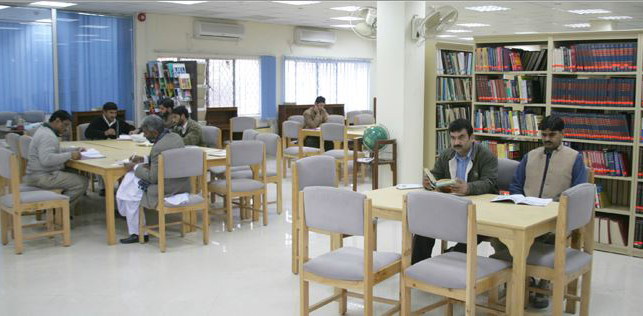
Small libraries have been set up at the Regional Campuses and Regional Centres. Although on a modest scale, they have the promise of making an important contribution to the range of services available to the students at local levels especially for postgraduate level students.
Study Centres
University’s main teaching medium is the correspondence text. A study centre provides supplementary opportunities of learning to a student; opportunities to consult a tutor about academic difficulties and to benefit from his face-to-face guidance; meet fellow students; participate in group discussions about the course material and so on. Study centres are usually based in local colleges or other educational institutions. They are opened in the evenings for specific periods.
The students of one particular geographical area are attached to the nearest and most-convenient study centre where they assemble for the tutorial meetings according to the schedule carefully drawn by the Directorate of Regional Services.
Study Centres for courses requiring development of skills are established at institutions which have proper facilities for practicals.
Individual student or group of students even the tutors benefit from these audio-video materials prepared by the University.
Course Workshops and Practicals
The regions organize workshops for the students of Teacher Education Programmes and Postgraduate programmes like Business Administration, Pakistan Studies, Educational Planning and Management, Teaching of English as a Foreign Language, Community Health and Nutrition, Economics, Physics etc.
The duration of these workshops varies from programme to programme (ranging from a week to one-and-a-half month).
Co-curricular Activities
These include study trips, debates, musical events, national days’ celebrations and sports, essay contests and the like. To promote healthy interaction among distant learners and to motivate them to become active learners, the AIOU Regional Centres organize co-curricular activities.